
Onsite solar built around the facility, not the roof
Independent technical and commercial advice for solar, storage and onsite PPA decisions in Mexico. MEP sells no panels and takes nothing from developers.
No developer contact. Confidential.
Regulatory figures as of 19 September 2026.
Confidential solar feasibility review
Share one recent electricity bill and a roof drawing or site plan. MEP identifies the information needed for a defensible technical and commercial screen.
Prefer email? Send the bill and site plan to info@mexicoenergypartners.com
Project value begins with load match and operating horizon
Load match
The value of generation depends on when the facility consumes power, not only on annual production.
Site fit
Roof, land, structural condition, electrical interfaces and interconnection define what can be built safely.
Operating horizon
Term, facility plans, maintenance and capital priorities determine which commercial structure is defensible.
Price becomes meaningful only after these three conditions are established.
Solar alone does not lower the punta demand charge
Under GDMTH, CFE bills capacity on your maximum demand during the punta period, a late-day window in most regions. Solar output has fallen away by then. A system sized on annual kWh can cut the energy charge and leave the capacity charge where it was.
MEP models the interval profile first, then tests whether storage or load shifting pays for itself. CNE storage rules published in April 2026 allow batteries that share the facility's connection point to operate without a separate permit, and explicitly allow peak shaving.
Choose the commercial model after the facility screen
Installer and developer pages each sell one financing product. MEP compares lifetime cost, retained risk, accounting implications and operating flexibility across all three before procurement.
| CAPEX | Lease | Onsite PPA | |
|---|---|---|---|
| Commitment | Own the system | Preserve capital flexibility | Buy energy under contract |
| Upfront capital | Full project cost | Low | None |
| Who owns the system | You | Lessor during the term, per contract | Developer |
| Performance risk | You, backed by contractor warranties | Shared, per contract | Developer, per production guarantees |
| Tax treatment | 100% first-year deduction available under LISR Art. 34-XIII if the system operates for at least five years | Lease payments, per contract structure | Energy payments as an operating expense |
| Best when | Capital is available, the operating horizon is long and the facility wants full ownership | Payment timing and equipment ownership need to match budget and balance-sheet priorities | A developer funds the project and the buyer accepts a long-term operating agreement |
Tax points are general. Confirm treatment with your tax adviser.
An onsite PPA is a long-term operating contract
Price and escalation
Energy price, indexation, taxes, pass-throughs and the savings definition.
Performance
Availability, production guarantees, degradation, metering and remedies.
Operating control
Maintenance access, outages, curtailment, safety and facility coordination.
End of term
Buyout, removal, extension, roof restoration and change in facility use.
The contract remains relevant long after construction is complete.
The rules in plain terms
Distributed generation in Mexico passed 5 GW at the end of 2025, almost all solar. The 2025 electricity law changed the thresholds that decide which route a project takes.
Under 0.7 MW
Distributed generation. No generation permit. Connects to the CFE distribution grid under an interconnection contract, with net metering and net billing still in use. The 2025 law raised the limit from 0.5 MW. Secondary DG rules are still being updated.
0.7 MW and above
Interconnected self-consumption. Requires a CNE generation permit, with a simplified route for 0.7 to 20 MW, and an interconnection agreement.
Surplus energy
Above the DG limit, surplus can be delivered to the grid without payment or sold only to CFE, which is not obliged to buy it.
Backup and storage
Intermittent self-consumption plants must add storage or pay CFE for backup. Co-located batteries need no separate permit.
As of 19 September 2026. Verify current rules before relying on this page.
Technical diligence makes bids comparable
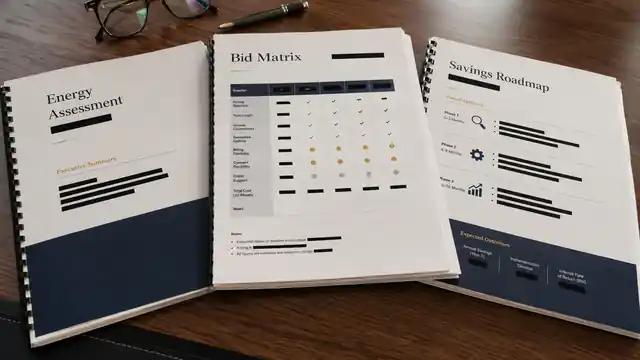
Each installer quotes its own energy model on its own assumptions. MEP sets one technical basis so every bid is priced against the same facts.
Structural basis
Roof zones, loading, remaining roof life, drainage, wind and access.
Electrical basis
Connection point, protection, transformer capacity, metering and controls.
Energy model
Weather source, losses, degradation, availability, clipping and load match.
Interconnection
Application route, studies, responsibilities, timing and operating limits.
Resolve material risks before signing
Roof and structure
Remaining roof life, loading, drainage, access and restoration obligations.
Interconnection
Schedule, studies, upgrades, operating limits and allocation of responsibility.
Energy model
Assumptions, losses, curtailment, degradation and production guarantees.
Developer credit
Construction capacity, warranties, security, step-in rights and continuity.
Facility change
Expansion, shutdown, relocation, load change and early termination.
Operations
Maintenance access, safety, outages, metering, reporting and the dispute process.
One mandate carries the project into operation
Assess
Load, site, structure and interconnection.
Structure
CAPEX, lease and onsite PPA comparison.
Procure
Comparable technical and commercial bids.
Oversee
Contract, construction and commissioning.
Verify
Production, invoices, savings and performance.
MEP works for the facility, not the developer
Recommendations are evaluated against facility requirements. MEP has no economic interest in which developer, installer, panel brand or financing model is selected.
Independence is a governance control.
What facility and finance teams ask first
Do we need a generation permit?
Not below 0.7 MW, which is distributed generation under the 2025 law. At 0.7 MW and above, interconnected self-consumption needs a CNE permit, with a simplified route up to 20 MW.
Can we sell surplus energy?
Distributed generation still uses net metering and net billing. At 0.7 MW and above, surplus can go to the grid without payment or be sold only to CFE, which is not obliged to buy it. MEP sizes the system so surplus does not carry the business case.
How long are onsite PPA terms?
Offers in the Mexican market run from 5 to 25 years. The term should match your operating horizon for the site, with buyout, extension and removal terms written in before signing.
What if we expand, relocate or shut down the site?
That is a contract question, not a technical one. MEP negotiates facility-change, assignment and early-termination terms before signing, so the PPA does not outlast the plant's plans.
Is our roof suitable?
It depends on remaining roof life, structural loading, drainage and access. A roof that needs replacement in eight years changes the economics of a 20-year system. A roof drawing lets MEP flag this early.
Why not go straight to installers?
You will, through a competitive process MEP runs. Installers quote their own product and financing on their own assumptions. MEP puts every bid on the same energy model, technical basis and contract terms so they can be compared.
Begin with a confidential solar feasibility review
Share one recent electricity bill and available roof drawings or a site plan. MEP will identify the information needed for a defensible technical and commercial screen, before any developer sees your data.
No developer contact. Confidential.
Request a feasibility review
Share one recent electricity bill and a roof drawing or site plan. MEP identifies the information needed for a defensible technical and commercial screen.
Prefer email? Send the bill and site plan to info@mexicoenergypartners.com